What Robots Bring to Your Enterprise’s Strategic Security Management

Dennis Crowley
11 May 2026
When United Healthcare CEO Brian Thompson was assassinated on a Manhattan street in December 2024, many boards of directors urgently paid more attention to physical safety as a part of their strategic security management.
“It shook a lot of people to the core,” says Mike Wanik, Asylon Robotics strategic adviser. “All of a sudden it became more personal, a security issue that involved the leadership of a company. And beyond that, it affected the continuity, the perspective [and] longevity of the board, the brand, the enterprise valuation—all these business issues came into play.”
While corporate boards are focused on cybersecurity, more are also now pushing for the same levels of vigilance in physical security. The traditional “guards and gates” model is proving insufficient as threats grow more sophisticated and operating environments grow more complex.
Recently, Wanik answered questions about the ways security data analytics from automated robots can meet boards’ evolving mandate.
Watch the interview above, and then keep reading for more information about how robots are a board-defensible investment in quantifiable security risk reduction and enterprise resilience.
Technology-Driven Risk Mitigation on the Perimeter
Fixed cameras and human patrols offer limited scopes and reactive capabilities. Robotic technology is revolutionizing strategic security management, shifting the focus from mere monitoring to proactive intelligence gathering that makes possible more dynamic, predictive, and effective protection.
Because boards have been concerned, and legitimately so, with cybersecurity, they understand technology can and must play a role in physical security.
 Wanik says, “It’s a time where not only are board members and C-suites expecting you to be involved, as a security director, with artificial intelligence, technology, robotics, and things of this nature, they expect it to be happening tonight. The foot’s on the accelerator, and hang on!”
Integrating robots into physical security operations satisfies the demand for solutions powered by technology.
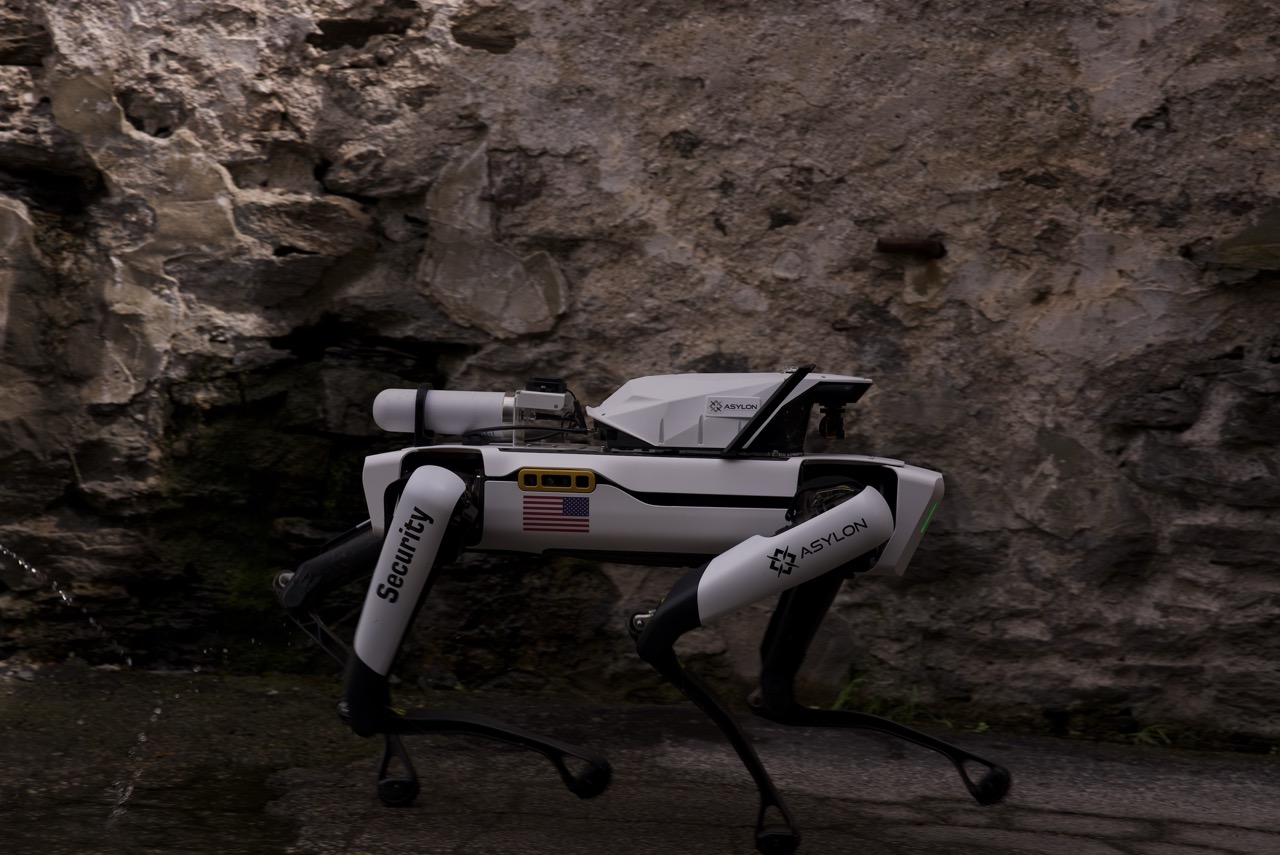
Equipped with advanced sensors, cameras, and AI capabilities, automated aerial drones and ground robots provide more coverage than the traditional approach. They tackle tasks too dull, dirty, or dangerous for human guards.
And they constantly collect impressive streams of information.
High-resolution visual feeds, environmental readings, thermal imaging, acoustic signatures, operational status, movement patterns—all of this data is a rich strategic resource. It can yield unprecedented insights into an enterprise’s operational health and security, allowing for the identification and mitigation of risks before they escalate into full-blown emergencies.
Through its Guardian drones and DroneDog robots, “Asylon provides the same level of data-driven certainty for the physical perimeter that CISOs provide for the network,” says Wanik.
How Robot Data Move the Board Beyond Metrics
Yet even with cyber-first boards, security directors, chief security officers, and chief financial officers still face the challenge of justifying and defending the cost of security robotics.
“Security is a tough thing to sell to management when you can’t show that the horse ran away from the barn,” says Wanik. “If you do show that, you’re telling the story of how you failed. If you use metrics, you’re also going to lose, because boards are not interested other than in what was interrupted or discovered before the loss or the event occurred. Metrics that merely count recurring activity are not well received.”
In this situation, too, robot data are indispensable, since they can highlight previously unseen and unknown vulnerabilities. They deliver the transparency that today’s boards demand.
Data such as heat maps and automated audit logs “show a book as opposed to a paragraph or a page,” Wanik explains. “It helps demonstrate the value but also helps direct resources to what may be a weak area of defense by location, time of day, or day of the week. … Selling security to the board at times can be as easy as showing unexpected events that have gone unnoticed, as opposed to using metrics.”
Wanik describes a video he saw in which a robot at a construction site intercepted three would-be intruders at night. The perpetrators fled, but not before snapping a photo of the robot. “Boards and C-suites like to see those wins,” he says. “That’s the true metric they want: an event deterred with the assailant now in full knowledge that this location is no longer an opportunity for them.”
Robots Reduce Costs and Increase Operational Efficiency
Automated robotic patrols significantly cut security labor costs. Robots don’t collect a paycheck, earn overtime, take sick days and vacations, or purchase uniforms. They also don’t grow fatigued and burn out.
Physical security operations will always need human guards, Wanik notes, to respond to medical emergencies and other situations. But robots can and do handle routine observation and reporting—not to mention a lot of responding—more cost-efficiently. Using security robots could save a company some $79,000 annually, according to Forrester Research.
 In addition, the Robotics-as-a-Service (RaaS) model brings the cost of acquiring security robots within more enterprises’ reach.
Because the organization pays a flat-line, known amount for robots on a subscription basis rather than purchasing them outright, the spend shifts from capital expenditure (CapEx) to operational expenditure (OpEx). No daunting, upfront investment is required, and the more predictable budget enhances financial flexibility and scalability.
Being able to run multiple missions from and process collected data through a central Robotic Security Operations Center (RSOC) adds further value, and not just for security operations.
Wanik explains that the RSOC both saves on labor dollars and “allows an organization to intake data at the macro level across the enterprise to identify things other than security issues; to identify working issues, political issues, and safety issues that are in common, and many times are not in the control domain of the security leader, but other business leaders in a company.”
The wealth of data robots amass and analyze can reveal patterns related to asset utilization, environmental impact, and even employee movement that provide valuable intelligence for broader enterprise strategy.
As Wanik remarks, “The value really gets great quickly.”
Stay in Front of Everything With Robotic Security From Asylon
Boards’ current attention to technology’s role in strategic security management offers CSOs, security directors, and CFOs a golden opportunity to bring robotics into their operations.
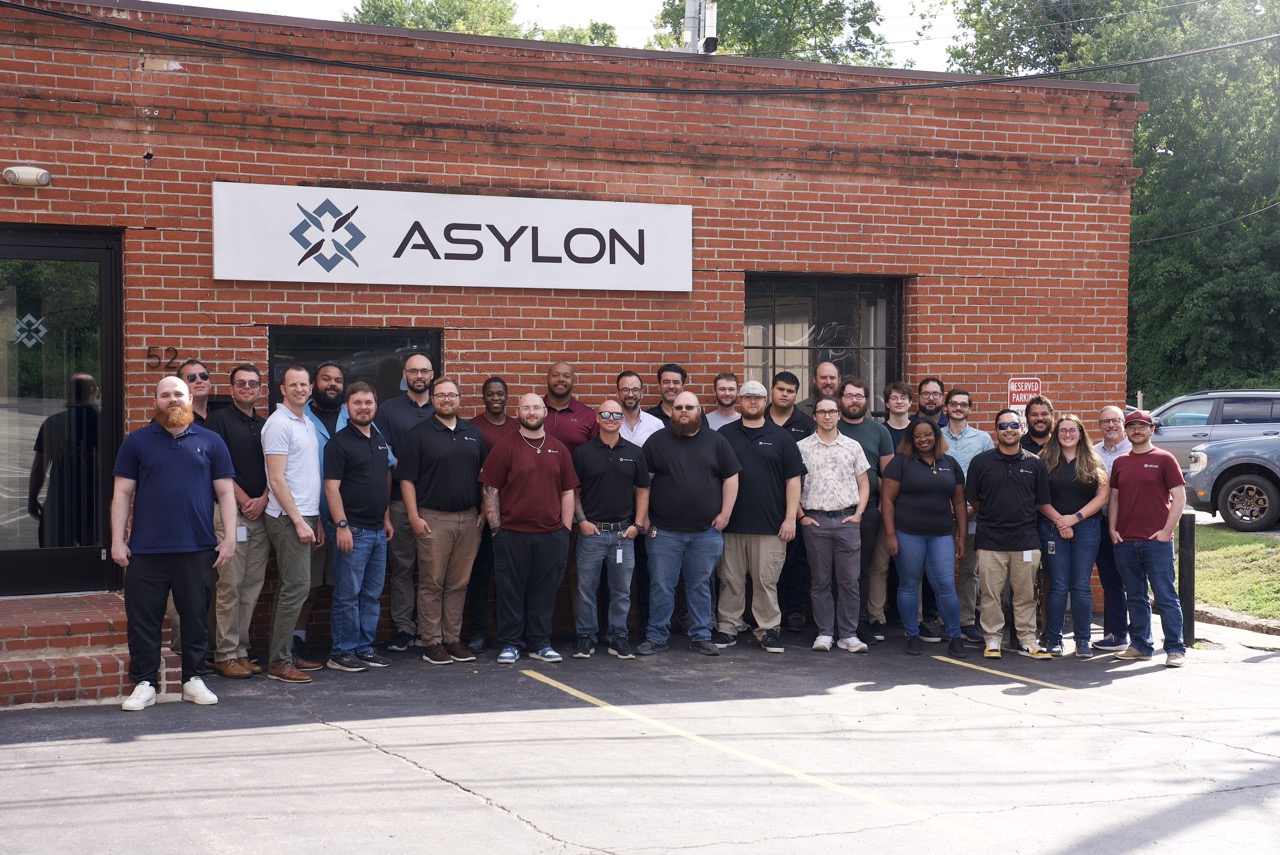 “It’s an exciting time to be able to present this solution to the board and the C-suite,” says Wanik, especially when those decision-makers are cyber-minded. Robots seamlessly bridge physical security and cybersecurity. The real-time surveillance, threat detection, and data analytics they offer can be the foundation of a comprehensive strategy that addresses diverse threats and optimizes the allocation of resources.
“If you’re coupled with forward-thinking firms, such as Asylon,” says Wanik, “that listen to you and help you solve problems new, old, and created by the change of the product world, the environments they’re in, and outside influences, you’re going to stay in front of everything.”
To find out for yourself how Asylon’s robotic security solutions can be a board-defensible asset for your organization, making your property and your people more secure, request your free strategic risk assessment today.
Connect With the Asylon Team
Want to schedule a demo, explore a partnership, or connect with our team? Use this form to reach out about media inquiries, career opportunities, or general questions about Asylon’s robotic security solutions. Our team will respond as soon as possible.