Exterior Guard Patrols Were a 2025 Solution. The 2026 Perimeter Security Model Is Different

Dennis Crowley
27 January 2026
Perimeter security only continues to become more complicated, dangerous, and costly. The threats are more varied, the operational expectations are higher, and leadership wants faster verification with better documentation. At the same time, the labor model many organizations still rely on for exterior patrols is becoming more difficult to sustain—not because security officers aren’t doing important work, but because the economics and operational realities of staffing have changed.
That’s why a growing number of security leaders are quietly rewriting their perimeter playbooks, and the shift is happening for more practical reasons:
- Hiring and retention pressures that create coverage gaps
- Wage and overtime pressure that makes long-term budgeting unpredictable and untenable
- Risk exposure and liability when patrols are missed or inconsistently documented
- And an uncomfortable, but essential, question: are we asking people to perform the most repetitive, exposed, and risk-prone work as the foundation of a perimeter strategy?
Modern security, and the associated threats it’s trying to counter, demand a more reliable and robust security model. To that end, security leaders are implementing a variety of technologies to help supplement and augment the security models of the past. If 2025 was the year security leaders tried to “push through” these constraints, 2026 is shaping up to be the year many decide to change the operating model.
The Workforce Challenge Isn’t Theoretical—It’s Structural
 When people talk about staffing challenges in security, it often sounds like a short-term hiring issue. Unfortunately, it’s bigger than that.
According to the U.S. Bureau of Labor Statistics, even with limited projected employment growth, there are still about 162,300 projected openings per year (on average) for security guards and gambling surveillance officers—largely due to replacement needs as workers change occupations or leave the labor force.
That replacement churn has direct operational consequences for perimeter programs:
- Site familiarity resets
- Consistency becomes difficult to maintain
- Post orders are executed unevenly
- Reporting quality varies by experience and supervision
- Supervisors spend more time filling gaps and managing churn than improving outcomes
In other words, even well-managed programs can struggle when the labor pool itself remains volatile.
This is one reason “more patrol hours” is becoming less reliable as a strategy. Leadership can approve a budget, but budgets don’t guarantee consistency—and consistency is what modern risk management demands.
Wage Pressure Is Steady, and Security Leaders Are Being Asked to Do More With Less
 Even in organizations that value security, the perimeter program is often expected to meet two opposing requirements at once:
- Improve outcomes (faster verification, better documentation, fewer incidents)
- Stabilize or reduce cost volatility
Meanwhile, compensation costs continue to rise across the private industry. BLS reporting shows private industry compensation costs increased 3.5% year-over-year (September 2024 to September 2025), with wages and salaries up 3.6% and benefit costs up 3.5%.
Security services providers are candid about what’s driving pressure in the field: turnover, rising hourly pay rates, labor shortages, and compliance demands. In one Security Management summary of industry findings, more than 40% of providers selected turnover as the top challenge, with many citing rising pay rates and labor shortages as key drivers.
For the security leader trying to plan across multiple sites, this creates a familiar pattern:
- Cost goes up
- Staffing uncertainty remains
- The perimeter posture still depends heavily on human consistency in repetitive tasks
That’s not a personnel problem. It’s an operating model problem.
Risk and Liability Don’t Care How Hard Staffing Is
 From a governance standpoint, the hard part isn’t the average day. It’s the day something goes wrong, and leadership asks questions like:
- Was the area patrolled as required?
- Was the patrol documented?
- Were known vulnerabilities addressed?
- How quickly did we verify and respond?
- If this becomes a claim, can we show we acted reasonably and consistently?
The reality is that external patrol programs are often judged in hindsight. And hindsight rewards documentation, repeatability, and verification—not intent.
This is where many “manual patrol-only” models become vulnerable, especially across large perimeters, remote facilities, yards, lots, or multi-building campuses. Humans can do excellent work, but they are not designed to be perfect, repetitive sensors for hours at a time—particularly at night, in weather, or across expansive terrain.
Security leaders are increasingly looking for a perimeter architecture that’s more resilient to human variability and staffing volatility, while improving auditability.
The Part We Don’t Talk About Enough: Guard Safety
There’s another dimension to exterior patrol dependence that deserves more attention: safety.
Exterior patrol is often the most exposed component of a security program:
- Low visibility
- Uneven terrain
- Isolated routes
- Higher chance of unpredictable encounters
- More frequent environmental hazards
Workplace violence is a measurable issue across the U.S. workforce. BLS data shows that across 2021–2022 there were 57,610 nonfatal cases of workplace violence requiring days away from work, job restriction, or transfer (DART)—and a majority involved days away from work.
The Bureau of Justice Statistics (and NIOSH) also published broader indicators on workplace violence that included both fatal and nonfatal dimensions across multiple federal datasets.
And when you look at safety-focused summaries, the National Safety Council notes hundreds of workers per year killed by assaults and highlights the continuing burden of assault-related workplace injuries.
The takeaway for security leadership is straightforward: If we can reduce the number of times people are placed into the most exposed, repetitive perimeter tasks—while improving coverage and documentation—we should.
That’s not anti-guard. That’s pro-professional.
So What Changes in 2026? The Perimeter “Operating System” Changes
The best security programs aren’t removing humans. They’re reallocating humans.
The 2026 perimeter security model is not a technology trend—it’s a design shift:
1) Robotics and drones handle repetitive exterior work
This includes:
- Scheduled and randomized exterior patrol routes
- Alarm response and visual verification
- Perimeter checks after access control alerts
- Time-stamped video documentation and reporting
The objective isn’t novelty. It’s consistency.
2) Humans focus on judgment, escalation, and response
This includes:
- Assessing context and intent
- Decision-making and coordination
- Incident escalation and law enforcement interface
- Internal stakeholder communication
- Exception handling when real life deviates from the plan
In a modern perimeter program, humans do what humans do best: interpret, decide, respond, and lead.
Robotics does what robotics does best: show up consistently, cover ground, verify quickly, and document every time.
This Is Also Where Guard Partners Win—Not Lose
It’s important to say this plainly, especially for security leaders who rely on strong guard partners:
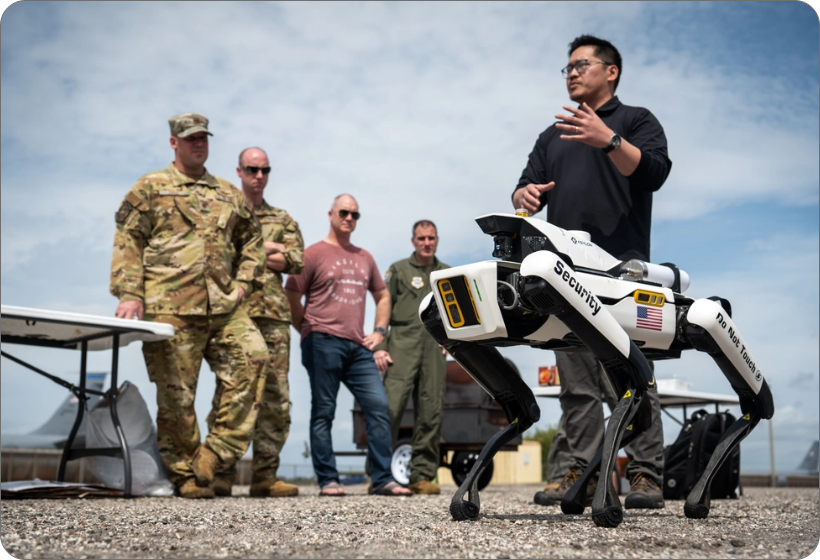
A robotics-enabled perimeter strategy can strengthen a guarding program. It provides situational awareness for responding officers, providing context before the human guard enters the scene. It also reduces the burden of staffing the most repetitive and exposed posts, while creating space for guard teams to focus on:
- Higher-value access control and interior duties
- Response readiness and de-escalation
- Customer service and stakeholder presence
- Supervisory quality and training
In other words: robotics can take pressure off the posts that are hardest to staff and retain, and help guard partners deliver a better overall security experience—without pretending staffing volatility is going away.
Where Asylon Robotics Fits
At Asylon Robotics, the goal is not to sell “a robot.” The goal is to help security teams modernize perimeter security in a way that reduces risk and improves consistency.
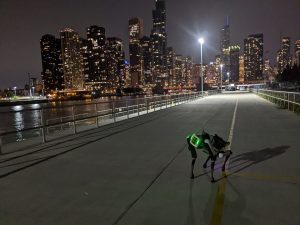
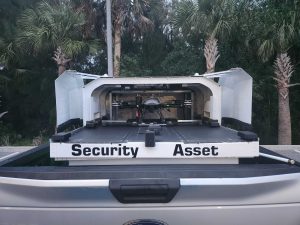
Security robots like DroneDog and Guardian are designed for the jobs that perimeter programs depend on most:
- Reliable exterior patrol presence
- Rapid aerial verification for alarms and incidents
- Repeatable documentation that improves accountability
- An operating model that supports security teams and guard partners
This is the core shift: a perimeter program built around repeatable outcomes, not fragile assumptions about staffing stability.
What Security Leaders Should Look for in a “Modern Perimeter Security” Program
Whether you evaluate Asylon or any other approach, the decision framework should be less about features and more about operational outcomes:
- Verification speed: How quickly can you get eyes on an alarm?
- Coverage consistency: Can you maintain perimeter presence without gaps?
- Documentation quality: Is reporting time-stamped, repeatable, and auditable?
- Safety impact: Does the model reduce exposure for your people?
- Program resilience: Does it tolerate churn, weather, and real-world variability?
- Integration: Does it work with alarms, access control, and your SOC workflow?
This is the standard security leaders are increasingly held to by executives, insurers, and operational stakeholders.
The Takeaway
Exterior guard patrols weren’t “wrong” in 2025.
They’re simply no longer sufficient as the primary perimeter strategy for many organizations facing labor volatility, wage pressure, safety exposure, and growing expectations for verification and auditability.
The 2026 perimeter security model is about humans + robotics:
- Robotics delivers consistent coverage, rapid verification, and documentation
- Humans deliver judgment, response, and leadership
- Guard partners deliver the presence, service, and professionalism that technology should support—not replace
Modern security isn’t about fewer people. It’s about better allocation of risk, improved safety, and a perimeter program that performs consistently—every day, not just on the best days.
To learn more about robotic perimeter security models, contact Asylon and request a one-on-one demo with one of our experts.
Your Frontline Security Update
Don’t miss out on Asylon’s biggest announcements, security innovations, and upcoming events.