How Robots Bring Data-Driven Security to Corporate Sites

Dennis Crowley
9 March 2026
Modern enterprise security strategy demands state-of-the-art tools and a proactive posture. It requires decisions fully informed by security data analytics and the agility to allocate risk management resources in the wisest possible way.
Robots are the key to such a data-driven security solution.
Security robots aren’t the lumbering lummoxes they once were. Now, they can easily provide comprehensive surveillance, viewing and entering places human guards can’t or shouldn’t. They collect in-depth information that makes predictive security analytics possible. And when deployed as a fully managed security service, they drive down costs and enhance operational efficiency in major ways.
Dennis Crowley, chief growth officer for Asylon Robotics, recently answered some questions about using robotics in a data-driven security strategy. Watch the interview, and then keep reading for more about robots’ role in bringing security operations into the 21st century.
Robots Provide Consistent, Thorough Security Coverage
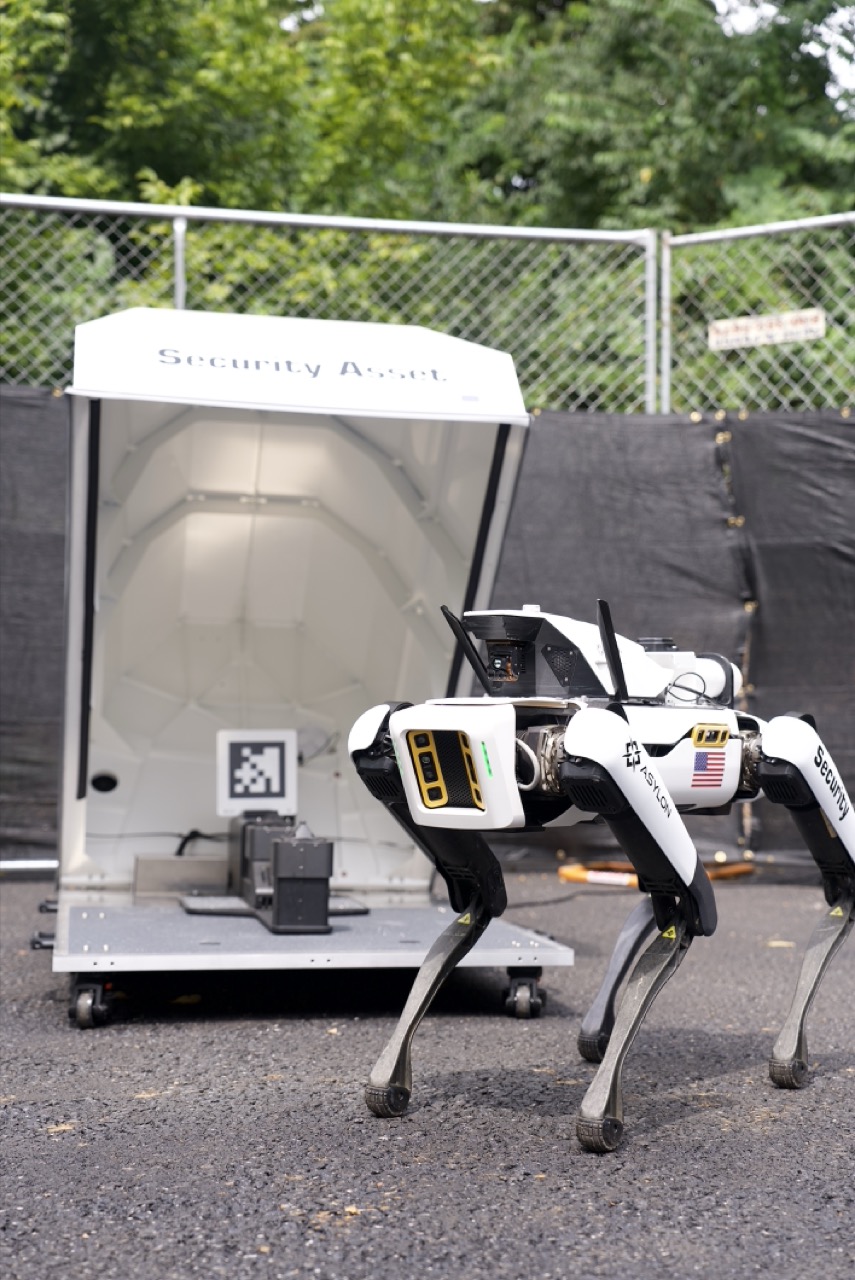 Traditional approaches to physical security fall short at today’s large corporate campuses and facilities. Exclusive reliance on fixed cameras and foot patrols leads to gaps in coverage, runaway labor costs, and unacceptable risks to property and people.
In the mid-2010s, robots entered the site security picture. “They were great devices that rolled around,” says Crowley. “I emphasize ‘rolled around’ because they were on wheels, working for very small, limited-use cases. They weren’t able to get to all of the places that were really needed to get to.”
Once Boston Dynamics introduced its “Spot” quadruped platform for commercial use in 2020, however, robotic perimeter security became a more viable option.
Remarkably agile and versatile, these ground robots traverse all kinds of terrain smoothly, in any weather. Their onboard sensors and cameras allow unmatched 24/7 surveillance, seeing more than any human guard’s unaided eyes could.
Likewise, technological advancement made aerial drones a valuable component of security operations. As they’ve become smaller, more reliable, and capable of carrying advanced monitoring and computing payloads, drones, like ground robots, have become a security force multiplier.
Ground robots and drones now have a long track record of success. Asylon’s own DroneDog robots and Guardian aerial drones have completed more than 250,000 automated missions.
The future of security robots and drones looks bright. Analysts project the global security robot market will grow from $16.56 billion in 2023 to $45.78 billion by 2032. Increasingly, robots will provide enterprises with a reliable, around-the-clock security presence.
Data Powers Optimal Security Resource Allocation
In a data-driven security strategy, the analytics protection that robots perform yields clear insights into where a site’s risks are highest. This knowledge lets organizations allocate resources more effectively and achieve a higher level of security for their investment.
Crowley points to security heat maps as one way data from robots facilitates more efficient, effective security: “One of our clients has told us they’ve taken our heat mapping index reports [of where incidents happen] and allow the robots to do the full patrols, but then still have human security officers go to those critical areas to do a more in-depth response.”
Security robots’ ability to gather and analyze data in real time and make instant decisions based on it helps identify incidents quickly, reducing their scope and impact. This proactive security approach mitigates expensive damages or losses and can ultimately translate to cost savings on incident recovery and insurance.
Analyzing historical data to spot patterns and trends also helps organizations use resources more strategically. Strategic deployment reduces redundancy and ensures robust yet economical security measures.
“With the advancements of agentic AI,” notes Crowley, “we can really start to be not just a reactive solution, but a proactive and predictive solution using the data we receive from the robots, plus all the other sensors we’ve integrated in.”
A Fully Integrated, Fully Managed Security Service Provides Expertise and Ease
 Security robots are a scalable solution because they can be integrated into existing security infrastructure.
For example, Asylon’s robotics software includes the Open API specification. This interface allows drones and robot dogs to work in concert with an enterprise’s current physical security information management (PSIM) tools and communicate seamlessly with its global security operations center (GSOC).
“Having a robot operate is great,” Crowley explains, “but having a robot that knows when an alarm has gone off on the east side of a building, and can go and investigate and inspect where it’s critical, and is able to share data with other systems . . . makes it a fully effective security asset in part of a fully integrated security program, and not just a standalone robotic solution.”
Using robots as a fully managed security service further increases their value to enterprises. Service providers can quickly adapt offerings to meet the client’s changing security requirements. They can deploy additional units or customize software to address new threats. As a result, enterprises maintain strong, consistent security without the added burden of managing complex logistics.
A fully managed security service delivers expert management, seamless integration, and optimal performance of robotics systems. These arrangements let enterprises reap the benefits of advanced technology without incurring the operational challenges and costs of trying to manage them on their own.
Keeping the Human in the Loop Makes Robotic Security Stronger
Although relying solely on human guards is no longer an option for corporate campuses, warehouses and distribution centers, and other enterprise sites, keeping a human presence “in the loop” is essential for ensuring robotics and AI achieve their full potential to enhance security.
“Most companies will come out, deliver, set up, and then turn [robots] over to an on-site security officer or a SOC operator who might be remote somewhere, who has twenty other tasks, and has never dealt with robotics before,” says Crowley. “What we do is we have the human in the loop who is dealing with [data from the robots] in real time, making effective decisions in doing the notifications to the onsite team.”
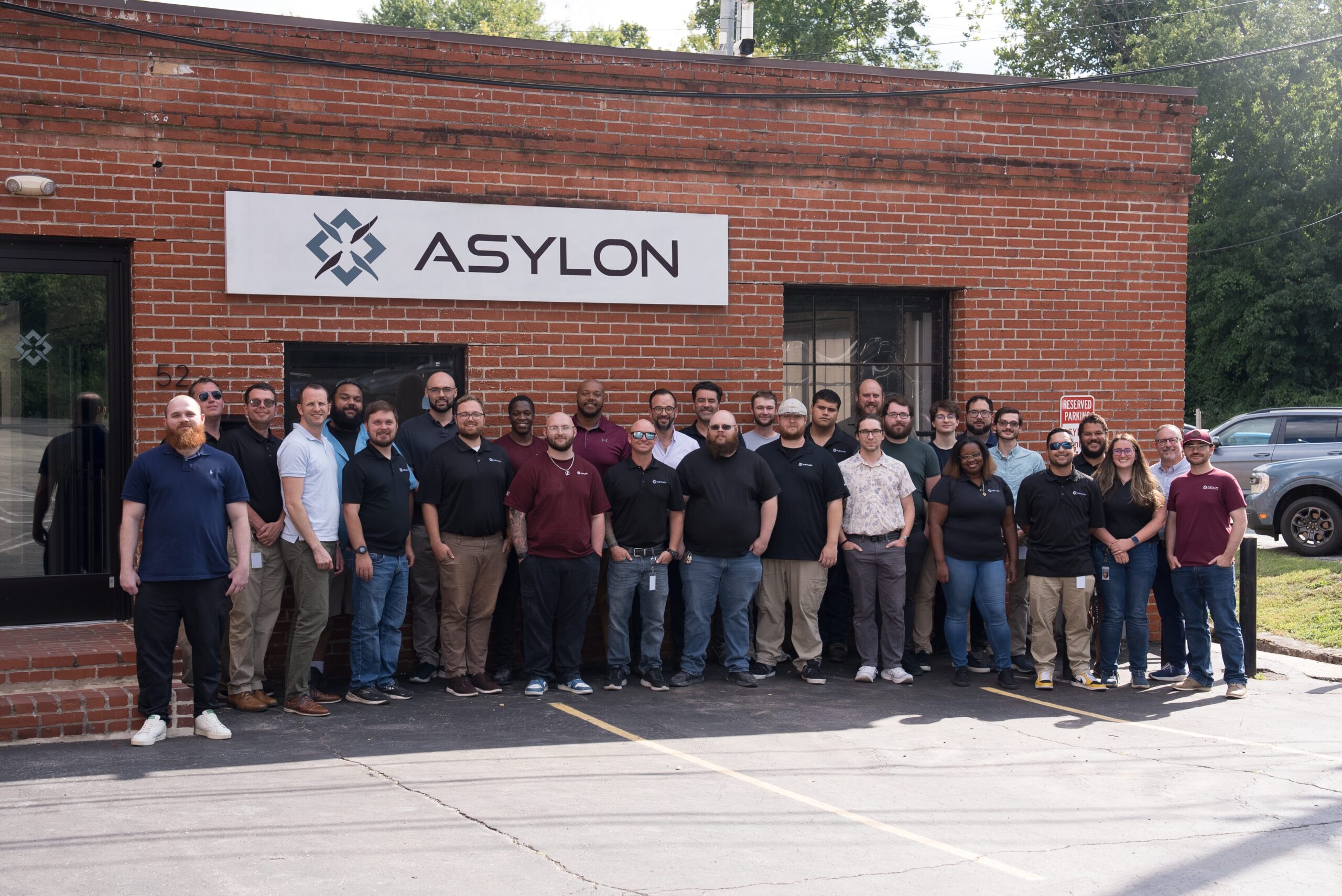 The trained and experienced operators in Asylon’s Robotic Security Operations Center are the humans who bring your enterprise’s data-driven security operations the best of both worlds: the consistent coverage and analytical prowess of advanced robotics, as well as the discernment of human oversight.
Our approach not only strengthens your security measures but also promotes trust and accountability within your organization and with your stakeholders.
To learn more, schedule your demonstration with one of our robotics experts. We’ll show you exactly how our ground robots and drones can be a force multiplier that keeps your sites safe, your operations streamlined, and your security expenses a competitive advantage instead of a cost center.
Connect With the Asylon Team
Want to schedule a demo, explore a partnership, or connect with our team? Use this form to reach out about media inquiries, career opportunities, or general questions about Asylon’s robotic security solutions. Our team will respond as soon as possible.