Robotic Perimeter Security for Large, Open Stadiums

Dennis Crowley
30 March 2026
Stadium venues create a perimeter challenge that traditional guard coverage doesn’t fully solve. Large sections of the property sit outside controlled access points. Some areas are open to the public. Others are only lightly monitored outside event hours. Maintaining consistent coverage across those spaces is difficult with guard patrols alone.
DroneDog supports these exposed zones with robotic perimeter security. It augments guard teams, maintains routine patrol coverage, and reduces pressure on overnight staffing without changing who makes security decisions.
Where Stadium Perimeters Break Down
Outside the main event area, stadiums include public-facing plazas and walkways that connect to the surrounding neighborhood. These areas function differently from interior zones. Activity rises and falls throughout the day, access remains open, and visibility varies depending on lighting and layout.
The Home Depot Backyard is one example of this type of space. It is a stadium-adjacent outdoor area that remains accessible outside event hours and requires regular perimeter surveillance. Areas like this tend to absorb more security attention while being harder to staff consistently, especially overnight.
The U.S. Department of Homeland Security classifies publicly accessible venues as soft targets because they lack fixed access control and rely more heavily on monitoring and response to manage risk. That reality places additional strain on perimeter coverage, particularly when staffing levels fluctuate.
How DroneDog Fits Into Stadium Security Operations
 DroneDog is a ground-based security robot assigned to routine perimeter patrols. It follows defined routes and maintains consistent observation without replacing human guards.
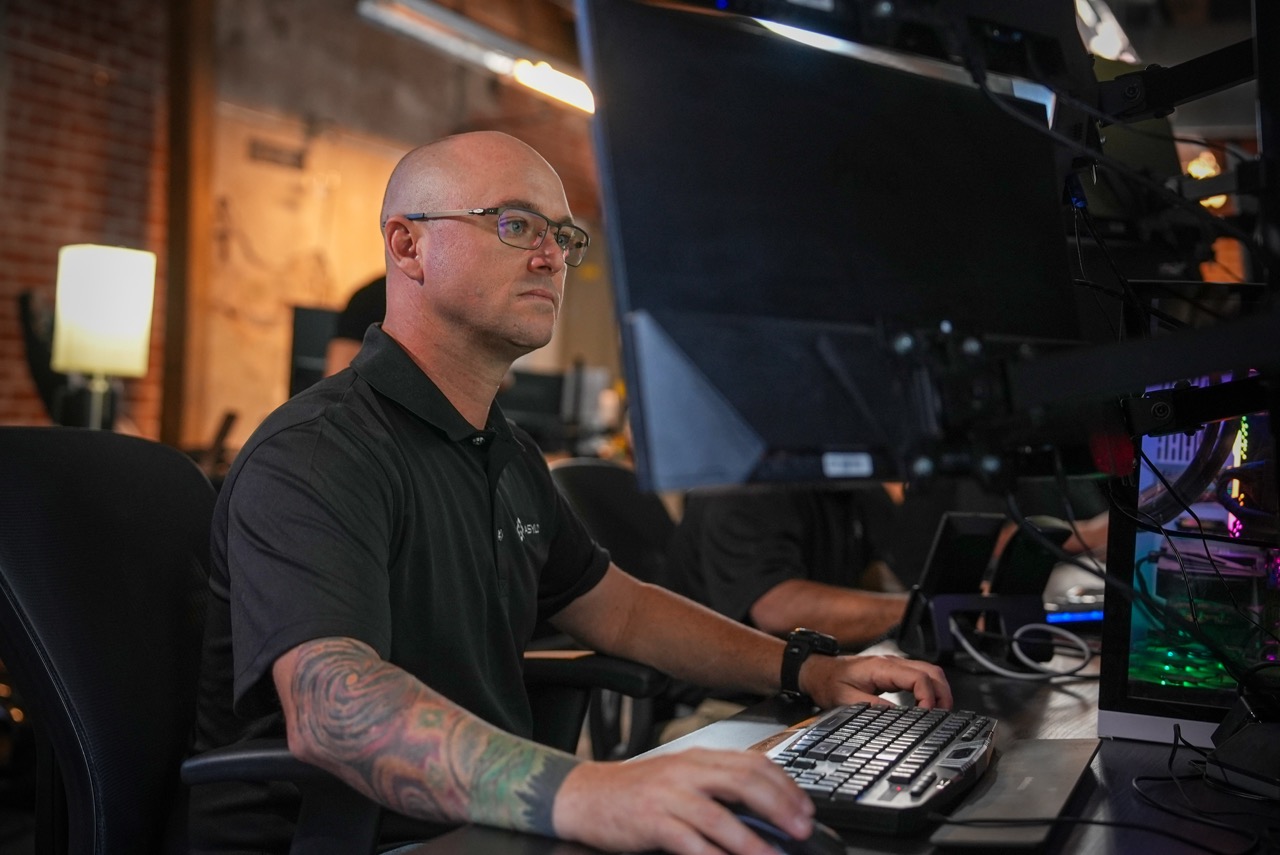
During patrols, DroneDog collects video and sensor data and streams it to Asylon Robotics’ Robotic Security Operations Center (RSOC). RSOC operators monitor activity in real time, review alerts, and verify potential issues. When a situation requires action, the RSOC escalates it directly to the customer’s security team. Decision-making and response remain with people on site.
For stadiums, teams typically deploy DroneDog in perimeter zones that remain open to the public or fall outside the reach of fixed cameras. A robot security dog supports perimeter surveillance while fitting into existing Perimeter Intrusion Detection System (PIDS) workflows. Rather than adding head count, it acts as a force multiplier that reliably extends coverage.
Operational Results at a Stadium Venue
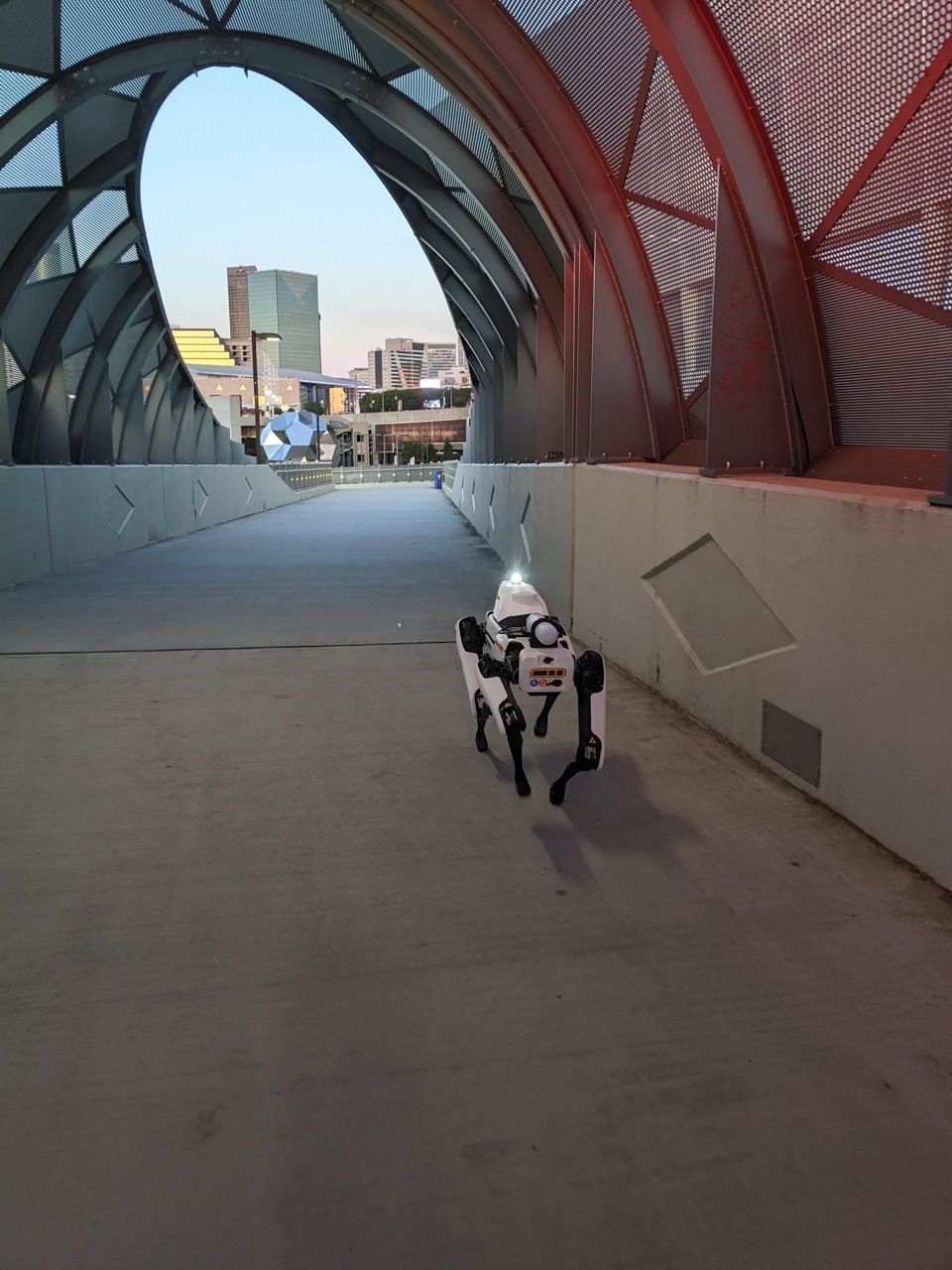 In a stadium deployment that included the Home Depot Backyard, DroneDog increased patrol frequency in a high-exposure perimeter zone. The robot covered the same routes overnight, providing repeatable coverage every shift.
That approach produced measurable outcomes:
- 30% cost savings tied to reduced overtime
- 0 incidents of theft or vandalism in the monitored area
- 2,000+ automated patrols completed
- 80+ security events identified
These results show how robotic perimeter security performs under real stadium conditions, not controlled environments. You can read more about how Asylon improved the perimeter coverage at Mercedes-Benz Stadium in the case study.
Why Guard Coverage Breaks Down at the Perimeter
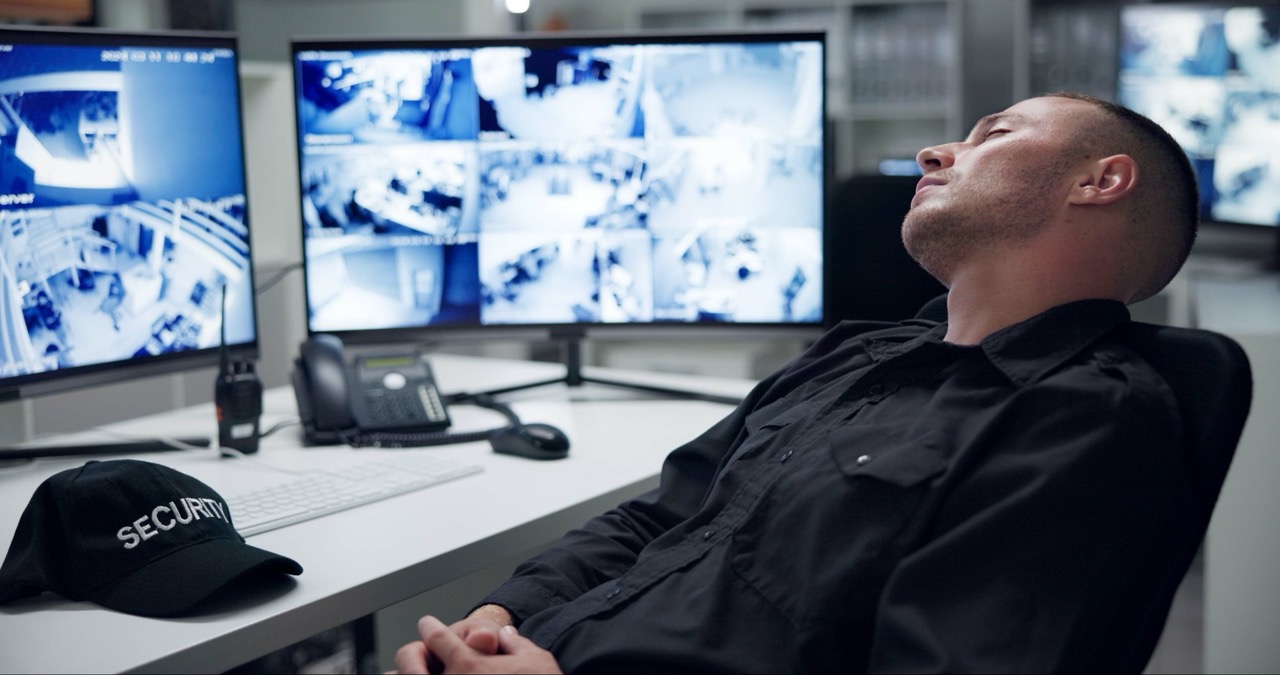
Security teams rely on people, but the work itself creates strain. Overnight shifts, repetitive patrol routes, and long periods of low activity contribute to fatigue. When officers are tired, attention drops and response slows, increasing the risk of missed activity.
Fatigue and burnout also drive turnover. The security industry continues to face high attrition, often linked to scheduling pressure, inconsistent hours, and overreliance on a small group of dependable officers. Replacing guards is costly and disruptive, and it places additional strain on the remaining team.
Perimeter posts feel this pressure first. These areas demand repeated patrols and constant presence, yet offer little variation in task or environment. DroneDog supports guard teams by taking on routine perimeter patrols in those zones. Officers remain responsible for assessment and response, while the robotic system maintains coverage that would otherwise require extended shifts or overtime.
Cost Structure and Coverage Stability
Stadium security costs rise fastest at the perimeter. Extending coverage usually means longer shifts or overtime during hours when activity is unpredictable. That model becomes harder to sustain as staffing fluctuates.
DroneDog changes how robotic perimeter security scales at a stadium. It runs routine patrols on a fixed schedule, without call-outs or premium labor. Guard teams stay responsible for decisions and response, while perimeter coverage operates at a predictable cost.
For stadium operators evaluating security technology for stadiums, this approach provides stability. Coverage in exposed areas no longer depends on filling overnight shifts, and perimeter monitoring stays consistent even when staffing pressure increases.
 Talk With Asylon About Stadium Perimeter Coverage
Asylon Robotics designs and operates robotic perimeter security programs that integrate with existing security operations. The focus stays on perimeter surveillance, guard augmentation, and systems that hold up in real environments.
If you’re assessing options for improving perimeter coverage at a stadium or similar venue, the Asylon team can explain how DroneDog fits into your operation and what deployment looks like on site.
Schedule a demo to speak with Asylon’s security specialists.
Connect With the Asylon Team
Want to schedule a demo, explore a partnership, or connect with our team? Use this form to reach out about media inquiries, career opportunities, or general questions about Asylon’s robotic security solutions. Our team will respond as soon as possible.